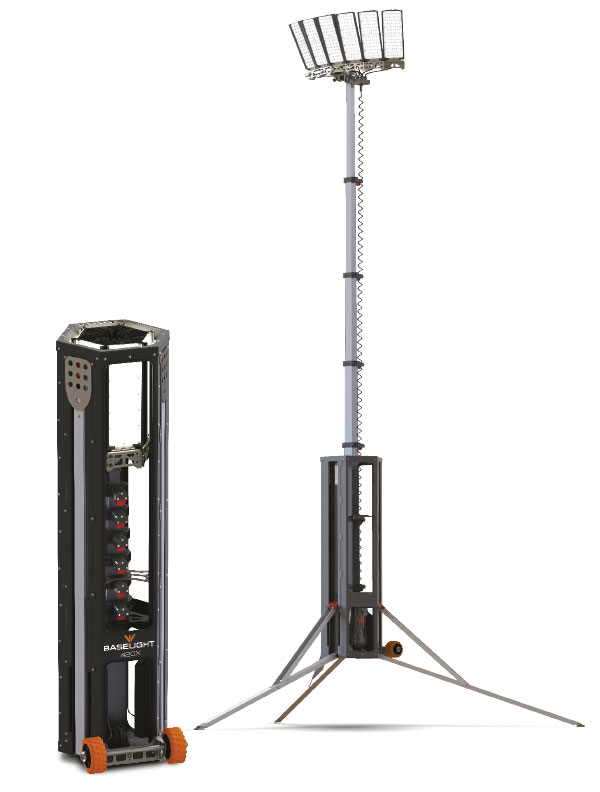
Lighting Towers
Lighting Towers: Illuminating Every Corner of Your Site
When daylight fades and work continues, or when a project operates around the clock to meet a critical deadline, reliable site lighting becomes as essential as any other piece of plant on the job. Lighting towers provide powerful, portable illumination that transforms dark or poorly lit environments into safe, productive workspaces, enabling operations to continue efficiently after dark, improving site security during unattended hours, and meeting the duty of care obligations that require adequate lighting wherever people are working.
Modern lighting towers are engineered to deliver maximum light output from a compact, easily transportable package. LED lighting towers have rapidly gained ground in recent years, consuming significantly less power than equivalent metal halide units, producing less heat, and reaching full brightness instantly. On diesel-powered towers, lower power consumption translates directly into reduced fuel use and extended run times between refuelling. For sites with sustainability requirements, our eco and hybrid equipment range includes solar hybrid and battery-powered lighting tower options.
Where a generator is already on site providing power, electric lighting towers offer a clean and cost-effective alternative to diesel units, eliminating local emissions entirely within the lit area. For comprehensive perimeter security, lighting towers work best alongside our temporary fencing to create a fully illuminated and secured site boundary during unattended hours.
Our lighting tower range covers metal halide, LED, solar hybrid, and battery-powered models to suit construction sites, events, utilities, and emergency response operations of every scale.